
AI chatbot patient engagement is changing the way patients communicate with healthcare providers. With WhatsApp bots, hospitals can quickly assist patients with tasks such as booking appointments, sending reminders, and answering basic health queries. These chatbots offer 24/7 support, share follow-up information and updates, and make patient communication easier and more accessible. They also help reduce administrative workload for healthcare teams, allowing organizations to deliver more efficient and patient-centered care.
Healthcare is undergoing a significant digital transformation, especially in the way patients communicate with healthcare providers. One of the most impactful developments in this shift is the rise of AI-powered WhatsApp conversational bots, which are redefining how patients access healthcare services.
These solutions use Conversational AI to enable real-time, personalized communication through WhatsApp, a platform that millions of people already use every day. By introducing a WhatsApp bot for patient communication, healthcare organizations can provide faster support, improve accessibility, and simplify interactions between patients and providers.
In this article, we explore how AI-powered WhatsApp chatbots are improving AI chatbot patient engagement, reducing operational inefficiencies, and enhancing the overall patient experience. We will also examine real-world implementations, technical considerations, and practical strategies for healthcare providers planning to adopt this technology.
Bridging the Healthcare Communication Gap with Conversational AI
Healthcare providers have long struggled to manage patient communication efficiently. Traditional methods such as phone calls, appointment desks, and manual follow-ups often result in long wait times, overloaded staff, and delayed responses.
Conversational AI offers a modern solution to these challenges. By introducing automation through messaging platforms like WhatsApp, healthcare organizations can streamline interactions and respond to patients instantly.A WhatsApp bot for patient communication can handle routine tasks such as appointment scheduling, reminders, and general inquiries. This not only reduces administrative pressure on healthcare staff but also improves the patient experience by providing quicker responses and easier access to services.
Since WhatsApp is widely used across the world, patients can interact with healthcare providers through an app they are already comfortable using. This makes the transition to AI-driven communication smooth and convenient.
Understanding AI WhatsApp Chatbots in Healthcare
An AI WhatsApp chatbot for healthcare is a virtual assistant powered by technologies such as Natural Language Processing (NLP) and Machine Learning (ML). These technologies allow the chatbot to understand patient queries and provide meaningful responses.
The chatbot typically integrates with hospital systems such as Electronic Health Records (EHR), Electronic Medical Records (EMR), and Customer Relationship Management (CRM) platforms. This integration allows the bot to provide personalized assistance and support effective AI chatbot patient engagement through real-time interactions.
Core Functions of AI WhatsApp Healthcare Bots
AI-powered WhatsApp healthcare bots are designed to streamline patient communication and improve service delivery through automated, real-time interactions. These bots handle a range of essential tasks, from answering patient queries to managing appointments and sending timely updates.
By leveraging conversational AI, they help healthcare providers reduce manual workload, enhance patient engagement, and ensure quicker, more efficient responses. Understanding their core functions highlights how these bots support both patients and providers in delivering a smoother healthcare experience.
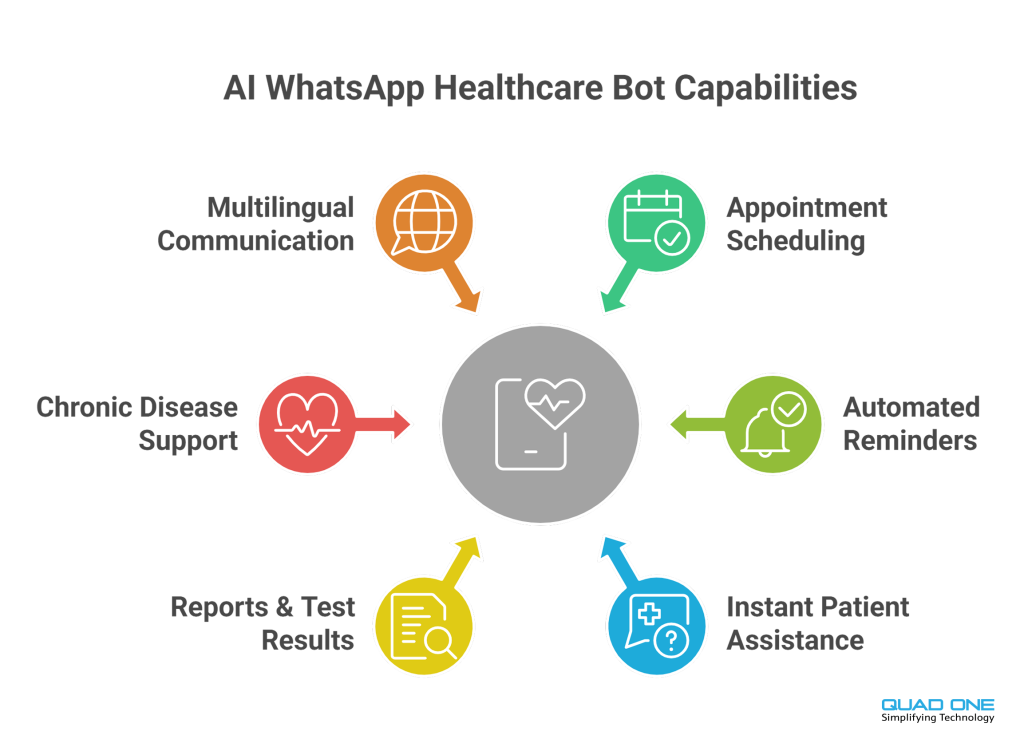
Appointment Scheduling
Patients can easily book, reschedule, or cancel appointments through simple chat interactions with the bot.
Automated Reminders and Notifications
The chatbot sends appointment reminders, medication alerts, and preventive care notifications to ensure patients stay informed and prepared.
Instant Patient Assistance
A WhatsApp bot for patient communication can answer common healthcare questions, provide symptom guidance, and offer general health information instantly.
Access to Reports and Test Results
Patients may receive diagnostic reports and follow-up instructions directly within the chat interface.
Chronic Disease Support
Chatbots can assist patients managing long-term conditions by sending medication reminders, wellness tips, and symptom tracking prompts.
How Do AI WhatsApp Bots Improve Real-Time Patient Interaction?
AI WhatsApp chatbots significantly improve AI chatbot patient engagement by enabling instant and continuous communication between patients and healthcare providers.
Instead of waiting on phone lines or contacting hospitals during limited office hours, patients can interact with a chatbot anytime through WhatsApp. This ensures faster responses and greater convenience.
During the COVID-19 pandemic, many healthcare institutions used chatbots to manage patient queries, provide vaccine information, and conduct preliminary symptom checks. These implementations demonstrated how conversational AI can support real-time patient interaction at scale.
By providing immediate responses and round-the-clock availability, AI chatbots help healthcare organizations maintain strong and consistent communication with patients.
The Benefits of AI Chatbot Patient Engagement in Healthcare
AI chatbots are changing how healthcare providers connect with patients by offering quick, personalized interactions. They make it easier for patients to get information, schedule services, and stay engaged throughout their care journey.
This leads to better patient satisfaction while also helping providers improve efficiency and deliver more responsive care.
24/7 Accessibility for Patients
AI-powered chatbots enable patients to reach healthcare services at any time of the day. This continuous accessibility improves patient satisfaction and ensures people can receive assistance whenever they need it.
Greater Operational Efficiency
Automation allows healthcare organizations to manage a large number of routine inquiries without overwhelming administrative teams.
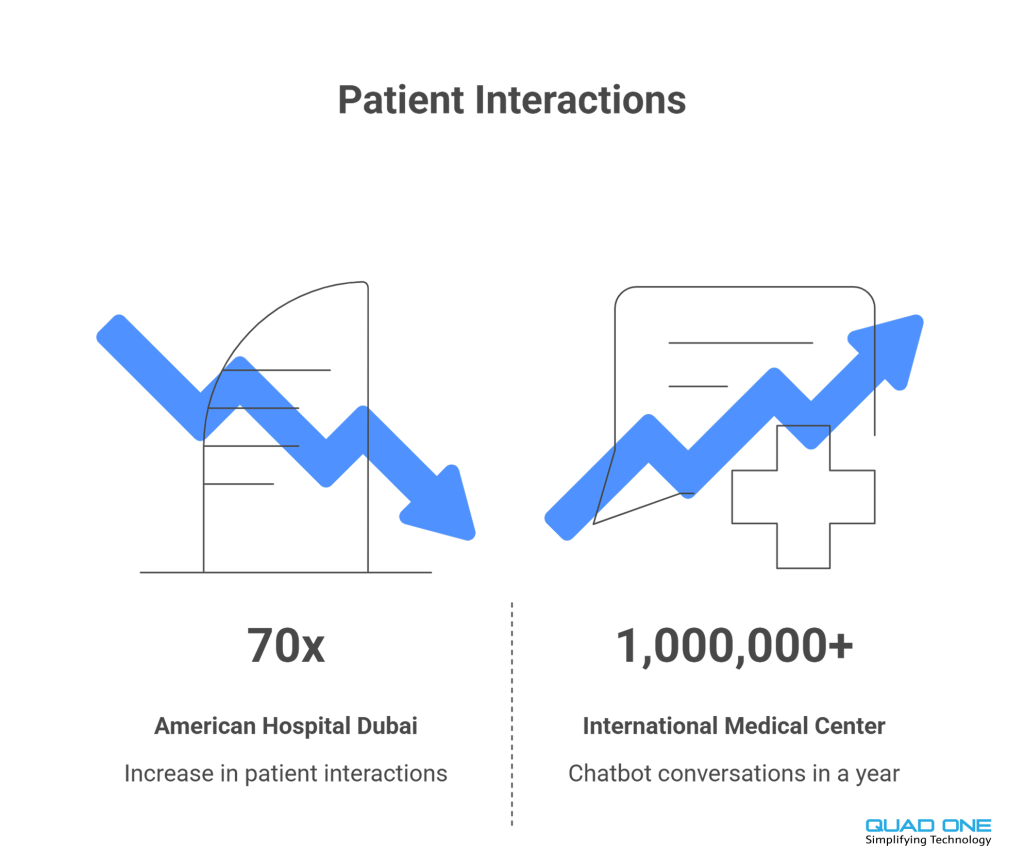
For example, the International Medical Center (IMC) in Saudi Arabia handled more than one million chatbot conversations in a single year, significantly reducing the burden on their call center operations.
Stronger Patient Relationships
Consistent communication through WhatsApp improves AI chatbot patient engagement by keeping patients informed and involved in their healthcare journey. Appointment reminders, follow-ups, and health tips encourage patients to stay proactive about their care.
At American Hospital Dubai, the implementation of a chatbot resulted in a 70-fold increase in patient interactions, demonstrating the effectiveness of conversational communication.
Multilingual Communication
A WhatsApp bot for patient communication can easily support multiple languages. This feature is especially valuable in regions with diverse populations, where language barriers often affect access to healthcare services.
By automatically switching languages, chatbots make healthcare information accessible to a broader range of patients.
What Do Real-World Results Show About WhatsApp Bots in Healthcare?
Real-world deployments highlight the growing success of AI chatbot patient engagement strategies.
Hospitals and Healthcare Networks
Several hospitals have implemented WhatsApp bots to streamline patient communication.
For example, American Hospital Dubai (AHD) introduced a chatbot to manage appointment bookings, test result notifications, and general inquiries. Within the first six months, the hospital experienced a dramatic increase in patient interactions while reducing call center workload.
Similarly, the International Medical Center in Saudi Arabia automated over one million patient conversations, improving efficiency and simplifying service access.
Private Clinics and Health-Tech Companies
Smaller healthcare providers are also benefiting from conversational AI.
In India, Taal Clinic recorded a 50% increase in patient engagement after implementing automated WhatsApp reminders and follow-ups. Health-tech platforms across the Middle East have also used chatbot solutions to automate appointment scheduling and reduce contact center traffic by up to 70%.
Government and Public Health Initiatives
Public healthcare systems have also adopted chatbots for large-scale communication.
The Dubai Health Authority introduced a WhatsApp bot during the COVID-19 pandemic to manage symptom checks, health alerts, and vaccine scheduling. Similarly, Saudi
These initiatives demonstrate how conversational AI can support efficient healthcare communication during public health emergencies.
How Does WhatsApp Bot Integration Work with EHR Systems?
To deliver personalized services, a WhatsApp bot for patient communication must connect with existing hospital systems.
Integration with EHR and CRM platforms allows the chatbot to retrieve relevant patient information, including appointment schedules, treatment updates, and diagnostic reports. This enables the bot to provide accurate and context-aware responses.
Ensuring Data Security and Compliance
Healthcare data requires strict protection. Chatbot systems must comply with data protection standards such as HIPAA, GDPR, and regional healthcare regulations.
WhatsApp provides end-to-end encryption, while chatbot platforms often add extra security measures such as two-factor authentication (2FA) or OTP verification to protect patient information.
Voice-Based Interaction Capabilities
Some advanced chatbots now support voice interaction. Patients can speak their queries rather than typing them, making healthcare communication more accessible for elderly users or individuals with disabilities.
Strategic Recommendations for Healthcare Providers
As healthcare organizations increasingly adopt digital solutions, a well-defined strategy becomes crucial for achieving success and long-term impact. Strategic guidance helps providers align technology with patient expectations, compliance requirements, and operational objectives.
With the right approach, healthcare providers can fully leverage digital tools to enhance patient engagement and improve efficiency. This section highlights key considerations to support effective implementation and sustainable results.
Promote Cross-Team Collaboration
Successful implementation of a WhatsApp bot for patient communication requires coordination between IT teams, compliance specialists, and patient service departments. Early collaboration ensures the solution fits within hospital workflows and regulatory requirements.
Continuously Improve the Chatbot Experience
Healthcare providers should track key performance metrics such as chatbot response accuracy, patient satisfaction, and appointment conversions. Insights from these metrics can help improve the chatbot and expand its capabilities over time.
Conclusion
AI-powered WhatsApp chatbots are transforming how patients communicate with healthcare providers. By improving AI chatbot patient engagement and enabling efficient WhatsApp bot for patient communication, these technologies make healthcare more accessible, responsive, and convenient.
From reducing operational workload to improving chronic disease management and patient engagement, conversational AI offers clear benefits across the healthcare ecosystem.
By adopting a strategic and phased implementation approach, healthcare organizations can leverage WhatsApp chatbots to improve patient access, strengthen communication, and enhance overall healthcare delivery.