

In a digital-first healthcare environment, patients expect fast, simple, and familiar ways to connect with providers. Messaging platforms have become a natural extension of patient communication, and WhatsApp has emerged as one of the most widely used channels across age groups.
When combined with artificial intelligence, a WhatsApp conversational bot can streamline patient interactions, reduce administrative workload, and improve patient experience while still keeping clinical decisions in the hands of healthcare professionals.
What Is an AI WhatsApp Bot in Healthcare?
An AI WhatsApp bot in healthcare is a smart conversational tool that interacts with patients on WhatsApp using artificial intelligence. It helps automate routine tasks like answering questions, scheduling appointments, sending reminders, and providing updates.
By using a familiar platform, these bots make healthcare communication more accessible, faster, and more efficient, improving overall patient engagement.
Definition and Core Capabilities
An AI WhatsApp bot in healthcare is a conversational assistant that interacts with patients through WhatsApp using natural language processing (NLP) and automation.
These bots can perform tasks such as:
- Appointment scheduling and management
- Answering patient queries instantly
- Symptom-based guidance
- Sending reminders and notifications
- Providing location-based healthcare information
By automating routine communication, these bots help healthcare providers deliver faster and more consistent patient support.
Why Healthcare Providers Are Adopting WhatsApp Bots
Healthcare organizations handle thousands of repetitive queries daily, from appointment requests to follow-up instructions. Traditional communication channels like call centers often struggle to scale.
AI-powered WhatsApp bots help providers:
Reduce call center workload: Routine patient requests such as appointment booking, reminders, and general inquiries can be managed automatically by the bot, allowing staff to focus on more important tasks.
Provide 24/7 patient support: Patients can receive assistance anytime, improving accessibility and ensuring their queries are addressed even beyond regular working hours.
Enhance response speed: Automated responses deliver quick replies to patient queries, helping improve overall satisfaction and engagement.
Enable easy digital care access: By connecting with healthcare systems, WhatsApp bots allow patients to interact with providers and access services easily through a platform they already use.
Why WhatsApp Is Becoming a Preferred Healthcare Communication Channel
WhatsApp is emerging as a preferred communication channel in healthcare because of its wide adoption, simplicity, and real-time connectivity. Since patients are already familiar with the platform, it offers an easy and convenient way to connect with healthcare providers without the need for additional apps or complicated processes. With features like instant messaging, media sharing, and automation, providers can communicate more quickly and efficiently.
Patient Familiarity and High Engagement:
WhatsApp is already a part of everyday life for millions of people. Because patients are so familiar with the platform, communicating with healthcare providers through WhatsApp feels simple and convenient. Instead of navigating complicated patient portals or waiting on phone calls, patients can just send a message the same way they would when chatting with friends or family.
Secure, Real-Time Messaging for Care Delivery:
WhatsApp also supports encrypted messaging and real-time communication, making it a dependable channel for patient interactions. When combined with AI technology, healthcare providers can respond to patient queries instantly while still ensuring secure and efficient communication.
How Does WhatsApp Chatbot Integration Work?
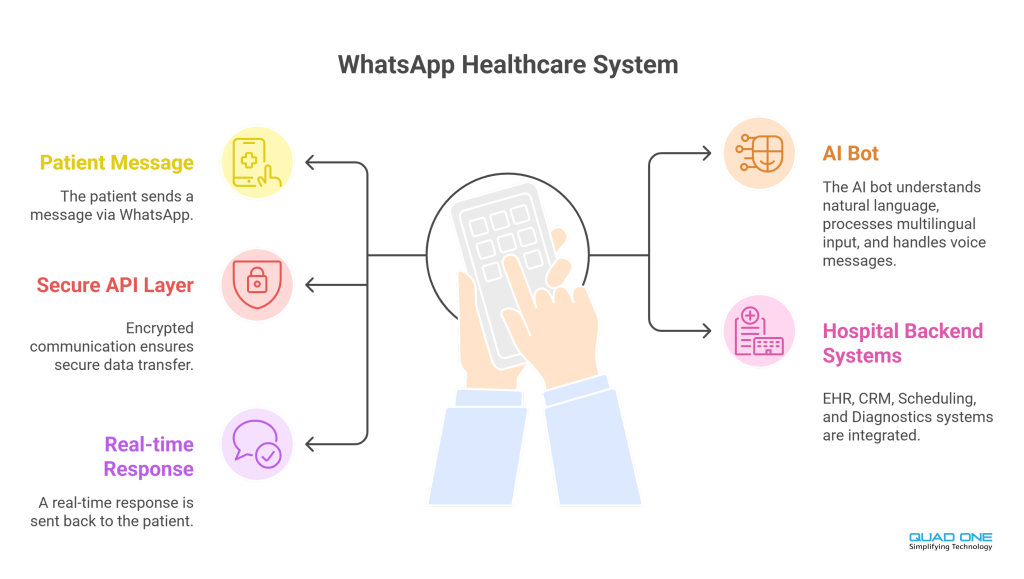
WhatsApp chatbot integration connects a chatbot to WhatsApp via APIs, enabling automated responses for queries, appointments, and updates. When linked with backend systems, it delivers accurate and efficient communication.
Integration With Hospital and Clinical Systems
A healthcare WhatsApp chatbot becomes truly effective when connected to backend hospital systems. Through secure APIs, the bot can communicate with hospital databases and service platforms.
This enables real-time actions such as appointment booking or retrieving patient records.
EHR, CRM, and Scheduling System Connectivity
AI chatbots can integrate with:
- Electronic Health Records (EHR)
- Patient relationship management systems (CRM)
- Appointment scheduling platforms
- Diagnostic and laboratory systems
These integrations ensure that patient interactions in chat are synchronized with hospital workflows.
Data Flow, Privacy, and Compliance Considerations
Healthcare data must be handled with strict privacy and security standards. Chatbot systems are typically designed with:
- Encrypted communication
- Role-based access control
- Secure API integrations
- Compliance with healthcare data regulations
This helps maintain patient confidentiality while enabling efficient digital communication.
Key Benefits of AI WhatsApp Chatbots in Healthcare
Unlike traditional methods, patients no longer have to wait in long queues to complete basic formalities, which saves significant time and effort. Digital tools allow many of these processes to be handled quickly and conveniently. They also play an important role in doctor consultations and appointment bookings, making the entire process faster and more efficient. In addition, patients can receive timely reminders, access important information, and communicate with healthcare providers more easily, improving the overall care experience.
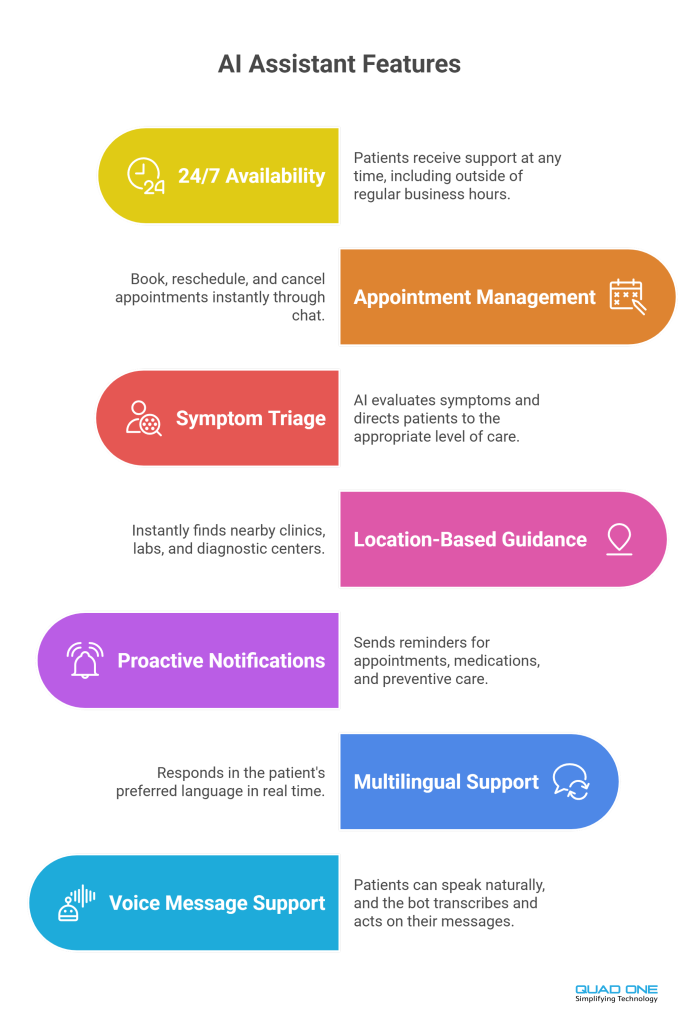
These technologies also play an important role in improving doctor consultations and appointment management. Patients can easily book, reschedule, or cancel appointments without needing to call the hospital or visit in person. This makes the scheduling process faster, more organized, and more efficient for both patients and healthcare providers.
Natural, Real-Time Conversations That Reduce Patient Effort
Many people think of AI as something highly technical or complicated, but modern AI systems are designed to make communication simpler and more natural for patients. Instead of requiring users to follow complex instructions or navigate multiple menus, AI-powered chatbots can understand everyday language. Patients can type their questions the way they normally would in a conversation, and the system can interpret the message and provide the appropriate response. This makes interactions feel more intuitive and comfortable, especially for patients who may not be familiar with complex digital platforms.
AI can also understand messages written in different languages and respond with relevant information in real time. Whether a patient is asking about appointment availability, doctor schedules, or general healthcare guidance, the system can quickly process the request and provide helpful answers. This reduces the effort patients need to spend searching for information or waiting for support, creating a smoother and more convenient healthcare communication experience.
Intelligent Symptom Triage via AI Chatbot Symptom Checker
Intelligent Symptom Triage is a system that evaluates patient symptoms, recognizes possible health conditions, and determines how urgent the care might be. By analyzing and categorizing symptoms, it helps guide patients toward the appropriate next step, such as self-care, booking a doctor’s appointment, or seeking immediate medical help.
An AI Chatbot Symptom Checker is a chat-based tool that allows patients to describe their symptoms. The AI reviews the information, asks additional questions if needed, and identifies potential health concerns while offering basic guidance on whether medical advice should be sought.
Location-Based Guidance to Nearby Healthcare Services
Patients can quickly locate the nearest healthcare facilities through the chatbot.
Example:
“Which center is closest for a blood test?”
The bot identifies nearby diagnostic centers and shares available services.
Comprehensive Appointment Management
Booking, Rescheduling, and Cancellations
Patients can manage appointments directly through WhatsApp.
Example:
“What appointments do I have next week?”
The bot lists scheduled appointments and provides options to reschedule or cancel.
Automated Reminders and Confirmations
Automated notifications help reduce missed appointments.
Example:
“Reminder: Your consultation starts in 1 hour.”
This keeps patients informed and improves hospital scheduling efficiency.
Proactive Engagement Through Timely Notifications
Healthcare bots can proactively send reminders and updates, including:
- Appointment reminders
- Pre-visit instructions
- Medication reminders
- Preventive care notifications
These automated communications improve patient adherence and continuity of care.
Multilingual Communication for Inclusive Care
Conversational bots can support multiple languages, allowing patients to interact in their preferred language.
Example:
“मुझे डॉक्टर की अपॉइंटमेंट चाहिए”
(Hindi: I need a doctor’s appointment)
The bot responds in Hindi with available appointment options.
This improves accessibility for diverse patient populations.
Follow-Up and Continuity With Preferred Providers
Bots can remind patients to schedule follow-ups with previously consulted doctors.
Example:
“Would you like to book again with Dr. Anamika?”
This supports long-term patient care and continuity.
Voice-Friendly Access for Improved Accessibility
Patients can send voice messages instead of typing.
Example:
Voice message: “Book me with Dr. Rakesh next Monday.”
The bot transcribes the request and completes the booking.
This feature is especially useful for elderly patients or users less comfortable with typing.
Clear Recovery and Escalation Flows
Human Handoff When Clarification Is Needed
If a message is unclear, the bot can ask clarifying questions or escalate the conversation to human support.
Example:
Patient: “Change my appointment”
Bot: “Would you like to reschedule or cancel your appointment?”
This ensures smooth interaction even when user input is ambiguous.
Handling Multiple Requests in a Single Conversation
Advanced conversational bots can handle multiple requests within a single message.
Example:
“Reschedule my appointment for tomorrow and send me the doctor’s available timings.”
The bot processes both requests at once updating the appointment and sharing the doctor’s available time slots within the same interaction.
Benefits Comparison – AI WhatsApp Bot vs Traditional Patient Communication
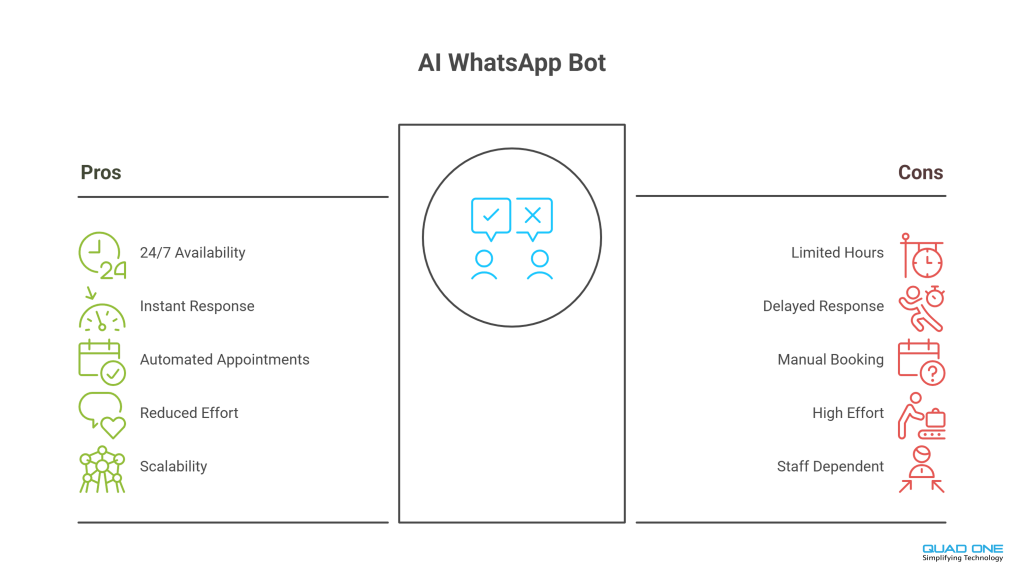
Comparison Table
| Aspects | AI Whatsapp Bot | Traditional Communication |
| Availability | 24/ 7 | Limited hours |
| Response | Instant | Delayed |
| Access | WhatsApp chat | Calls / visits |
| Appointments | Automated | Manual |
| Scalability | Handles many patients | Staff-dependent |
| Efficiency | Less admin work | More manual work |
How to Implement an AI WhatsApp Bot in Healthcare
Implementing an AI WhatsApp bot in healthcare starts with a clear approach to ensure communication is secure, efficient, and easy for patients. It includes choosing the right platform, connecting it with existing systems like CRM or hospital software, and defining key use cases such as appointments, queries, and updates.
With the right setup, healthcare providers can simplify interactions, reduce manual effort, and offer faster, more convenient communication through a platform patients already use.
Step-by-Step Implementation Checklist
- Define patient use cases
Identify tasks the bot should automate, such as appointment scheduling or symptom triage. - Choose an AI chatbot platform
Select a conversational AI platform with healthcare integration capabilities. - Integrate clinical and scheduling systems
Connect the chatbot with hospital management systems, EHRs, and appointment platforms. - Configure compliance and data security
Ensure encryption, access control, and regulatory compliance. - Train AI workflows and fallback logic
Develop conversation flows and escalation mechanisms. - Test patient journeys
Validate interactions across different scenarios before deployment. - Launch and monitor performance
Track chatbot usage, accuracy, and patient satisfaction metrics.
Key KPIs for AI Healthcare Chatbots
Tracking the right KPIs is essential to measure the effectiveness of AI healthcare chatbots. These metrics help providers understand performance, improve user experience, and ensure the chatbot is delivering real value. By focusing on key KPIs, organizations can optimize chatbot efficiency and drive better outcomes.
KPI Benchmark Table
| KPI | PURPOSE |
| Patient Satisfaction Score (CSAT) | Measures patient experience |
| Appointment Conversion Rate | Tracks successful bookings |
| Reduction in Call Center Load | Indicates operational efficiency |
| Cost per Patient Interaction | Evaluates financial impact |
| Response Time Improvement | Measures Communication Speed |
The Future of AI WhatsApp Chatbots in Healthcare
AI-powered chatbots will play a bigger role in healthcare by enabling more personalized, real-time interactions and supporting features like remote monitoring and predictive insights. This will help providers improve efficiency, decision-making, and overall communication.
Predictive Care and Preventive Engagement
Future AI systems will analyze patient behavior and health data to proactively suggest preventive care, screenings, or follow-up visits.
Deeper AI-Driven Clinical Support
With advances in generative AI and predictive analytics, chatbots may assist clinicians with patient summaries, care coordination, and decision support while maintaining strict clinical oversight.
Conclusion
AI-powered WhatsApp chatbots are transforming healthcare communication by making patient interactions faster, more accessible, and highly scalable. From appointment scheduling and symptom guidance to proactive notifications and multilingual support, these conversational systems help healthcare organizations deliver better patient experiences while reducing administrative workload.
For hospitals, telemedicine platforms, and healthcare IT leaders, implementing a WhatsApp chatbot for healthcare is becoming a key component of modern digital health infrastructure. With strong ROI potential and improved patient engagement, conversational AI is set to play a central role in the future of healthcare delivery.