

Modern healthcare communication is being transformed by AI-powered WhatsApp chatbots, enabling faster and more accessible patient interactions while emphasizing the need for strong data privacy. While WhatsApp provides end-to-end encryption for secure messaging, true compliance depends on how healthcare providers implement and manage the system. Regulations like HIPAA and GDPR require safeguards such as patient consent, minimal data collection, secure storage, and access controls. By following best practices, healthcare organizations can deliver efficient, AI-driven communication while ensuring data security and regulatory compliance.
WhatsApp Chatbot Patient Data Privacy: HIPAA Compliance, Encryption & Security Best Practice
Healthcare communication is rapidly shifting toward digital-first experiences, and platforms like WhatsApp are at the center of this transformation. While AI-powered WhatsApp chatbots improve patient access through instant support, appointment booking, and real-time updates, they also raise an important question -how secure is patient data?
Ensuring privacy, compliance, and security is critical when handling sensitive healthcare information. This blog explores how WhatsApp chatbots align with global data protection standards and best practices.
Why Does Patient Data Privacy Matter in Healthcare Messaging?
Patient data is among the most sensitive types of personal information. It includes medical history, diagnoses, test results, and personal identifiers. Any breach can lead to serious consequences such as identity theft, legal penalties, and loss of trust.
In healthcare messaging:
- Conversations often contain confidential medical details
- Patients expect secure, private communication channels
- Regulations strictly govern how data is stored and shared
Protecting this data is not just a legal requirement, it’s essential for maintaining patient trust and delivering responsible care.
How Does WhatsApp’s End-to-End Encryption Protect Healthcare Data?
One of the key security features of WhatsApp is end-to-end encryption (E2EE). This means:
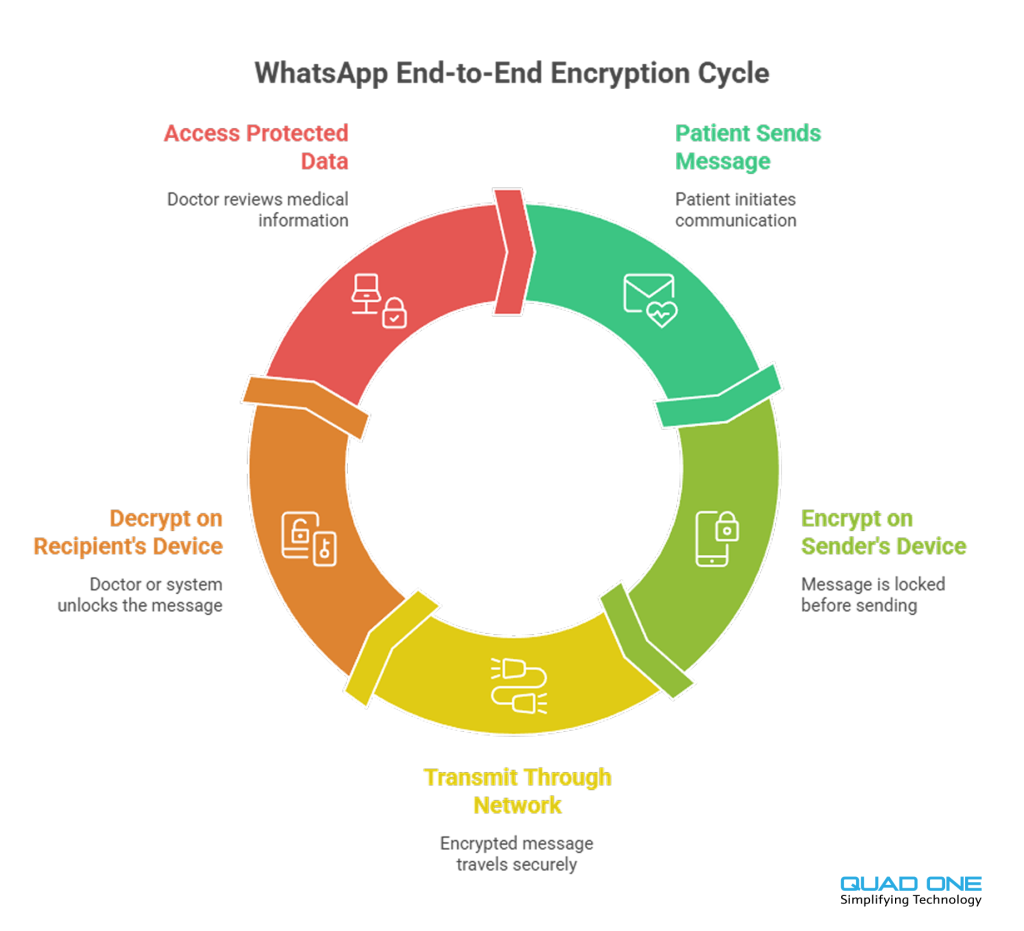
- Messages are encrypted on the sender’s device
- Only the recipient can decrypt and read them
- Even WhatsApp itself cannot access the content
For healthcare providers, this ensures:
- Secure transmission of patient information
- Protection against unauthorized interception
- Safer communication compared to traditional SMS or email
However, encryption alone is not enough data handling practices on the provider’s side also play a major role.
Is WhatsApp HIPAA Compliant for Healthcare Chatbots?
HIPAA sets strict standards for protecting patient health information in the U.S.
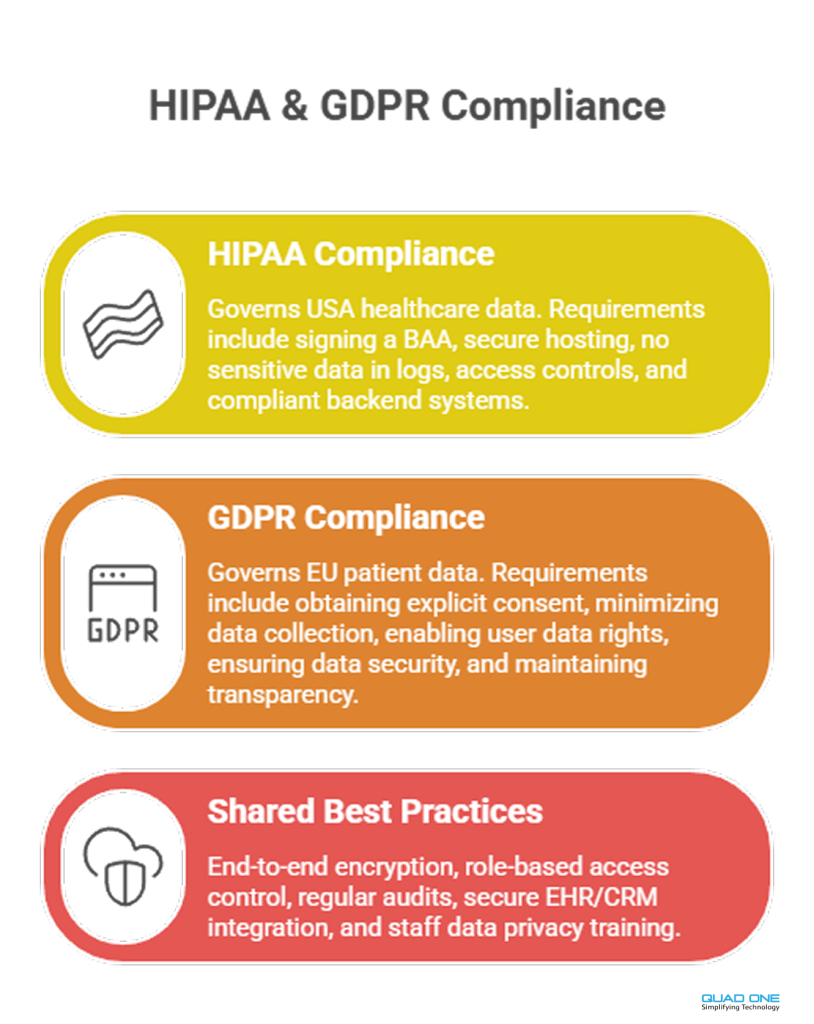
By default, WhatsApp is not fully HIPAA compliant because:
- It does not provide a Business Associate Agreement (BAA)
- Data storage and audit controls are limited
- Compliance depends on how the solution is implemented
That said, healthcare organizations can build HIPAA-aligned solutions by:
- Using secure hosting environments
- Avoiding storage of sensitive data in chat logs
- Implementing access controls and audit trails
- Integrating compliant backend systems
How Do You Make a WhatsApp Healthcare Chatbot GDPR Compliant?
GDPR governs data privacy across the European Union and emphasizes user consent and transparency.
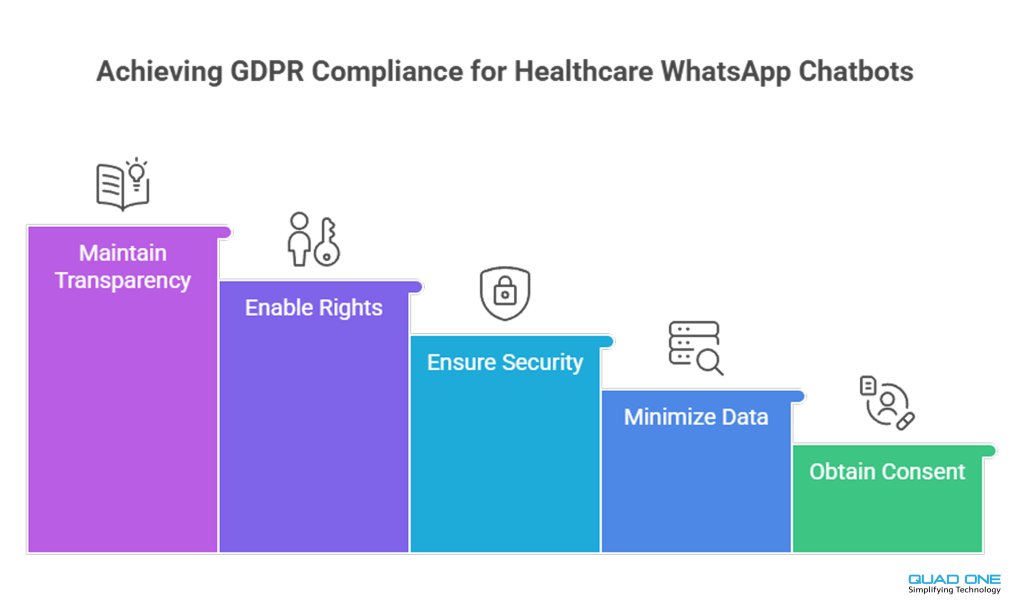
To ensure GDPR compliance, healthcare chatbots must:
1. Obtain Explicit Consent
Before any interaction starts, patients should clearly consent to how their data will be collected, stored, and used. This consent must be clear, specific, and voluntarily given, rather than assumed or pre-selected. Healthcare providers should use simple consent prompts within platforms like WhatsApp to ensure patients fully understand their choices and have the option to withdraw consent at any time.
2. Minimize Data Collection
Healthcare chatbots should adhere to the principle of data minimization by collecting only the information necessary to serve a specific purpose. Unnecessary personal or medical details that are not directly relevant should be avoided. This approach helps reduce privacy risks and supports compliance with regulations such as GDPR.
3. Ensure Data Security
Robust security measures are essential to protect sensitive patient data. These include:
- End-to-end encryption to secure communications
- Secure APIs for safe system integrations
- Encrypted databases along with protected cloud storage
- Ongoing security audits and continuous monitoring
Together, these measures help prevent unauthorized access, data breaches, and misuse of information.
4. Enable User Rights
Patients should be given complete control over their personal data, which helps build trust and transparency in digital healthcare interactions. This includes the ability to:
- Access their data: Patients should be able to review the information collected about them whenever needed.
- Request corrections: They should have the option to update or fix any inaccurate or outdated details.
- Request deletion: Patients can request the removal of their data, exercising their “right to be forgotten” under regulations like GDPR.
Ensuring these rights not only empowers patients but also promotes responsible and ethical data management.
5. Maintain Transparency
Transparency is essential for building trust in healthcare communication systems. Providers should clearly explain:
- What data is being collected
- Why it is being collected
- How it will be stored, used, and protected
- Who can access the data
Privacy policies should be written in simple, easy-to-understand language and made readily available, Keeping patients informed at every step fosters confidence and supports regulatory compliance.
Best Practices for Secure WhatsApp Healthcare Chatbots
To build a safe and compliant chatbot, healthcare providers should:
- Use the official WhatsApp Business API
- Integrate with secure EHR/CRM systems
- Implement role-based access controls
- Regularly audit and monitor data usage
- Train staff on data privacy protocols
These steps ensure that chatbot solutions are not only efficient but also secure and trustworthy.
CONCLUSION:
AI-powered WhatsApp chatbots are transforming patient access by offering faster, more convenient communication. However, with this innovation comes the responsibility to protect sensitive healthcare data.
By aligning with standards like HIPAA and GDPR, and following strong security practices, healthcare providers can confidently deliver digital experiences that are both efficient and secure.
The future of healthcare communication lies in balancing innovation with privacy and getting both right is key to long-term success.