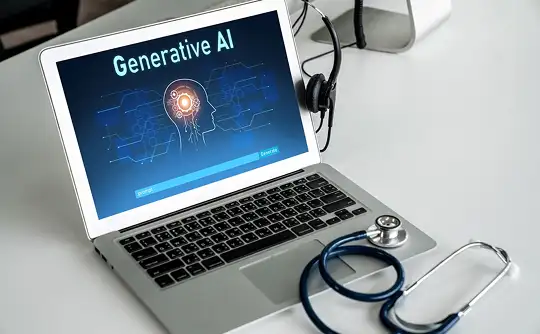

Prompts play a critical role in healthcare because they directly shape how AI interprets information and delivers results. In a field where accuracy, clarity, and safety are essential, even small changes in how a prompt is written can significantly influence the outcome.
A well-designed prompt helps AI generate precise and clinically relevant responses whether it’s summarizing patient records, drafting medical documentation, or supporting decision-making. By clearly defining the context, intent, and expected format, prompts reduce ambiguity and ensure the output aligns with clinical needs.and it changes everything.
Prompt Engineering in Healthcare: Best Practices, Strategies and Trends
With technology becoming a bigger part of healthcare, giving clear instructions to systems is more important than ever. Prompt engineering helps doctors and staff get accurate answers for tasks like diagnosis, documentation, and patient data. By framing the right questions, healthcare professionals can reduce errors, save time, and make better-informed decisions.
It also supports smoother workflows by simplifying complex processes and improving communication between teams and digital tools. As new trends and tools continue to evolve, adopting effective prompt strategies can help healthcare organizations stay efficient, deliver more personalized care, and achieve better patient outcomes.
The Rise of AI in Healthcare: A New Frontier
Healthcare is stepping into a new era where artificial intelligence is not just supporting care .It’s actively shaping how it’s delivered. From decoding complex medical data in seconds to assisting clinicians in real time, AI is turning possibilities that once felt futuristic into everyday reality.
This shift marks a new frontier, where technology and human expertise work side by side to improve outcomes, reduce inefficiencies, and create more personalized patient experiences. As AI continues to evolve, it’s redefining the boundaries of what healthcare systems can achieve.
How Generative AI is Transforming Modern Care
In recent years, healthcare has witnessed rapid advancements in artificial intelligence. Models like GPT-4 have demonstrated near expert-level performance in medical assessments, while Med-PaLM 2 has shown high accuracy in clinical reasoning tasks. These developments highlight how natural language processing is reshaping both clinical and operational aspects of healthcare.
From enabling personalized treatment approaches to improving operational efficiency, AI is helping providers make more informed and timely decisions. Today, healthcare organizations are integrating large language models (LLMs) into workflows to summarize electronic health records (EHRs), assist with patient communication, and generate clinical documentation all guided by well-crafted prompts.
What Is Prompt Engineering in Healthcare?
Prompt engineering in healthcare refers to the practice of designing structured and precise instructions that guide AI systems to produce accurate, safe, and clinically relevant outputs.
In a high-stakes environment like healthcare, prompts act as a control layer between human intent and AI response. Whether it’s generating diagnostic suggestions, drafting reports, or assisting in patient interactions, the quality of the prompt directly influences the reliability of the outcome.
Well-designed prompts help reduce ambiguity, ensure alignment with clinical standards, and support compliance with regulatory requirements. As AI adoption grows, prompt engineering is becoming essential for integrating AI safely and effectively into healthcare workflows.
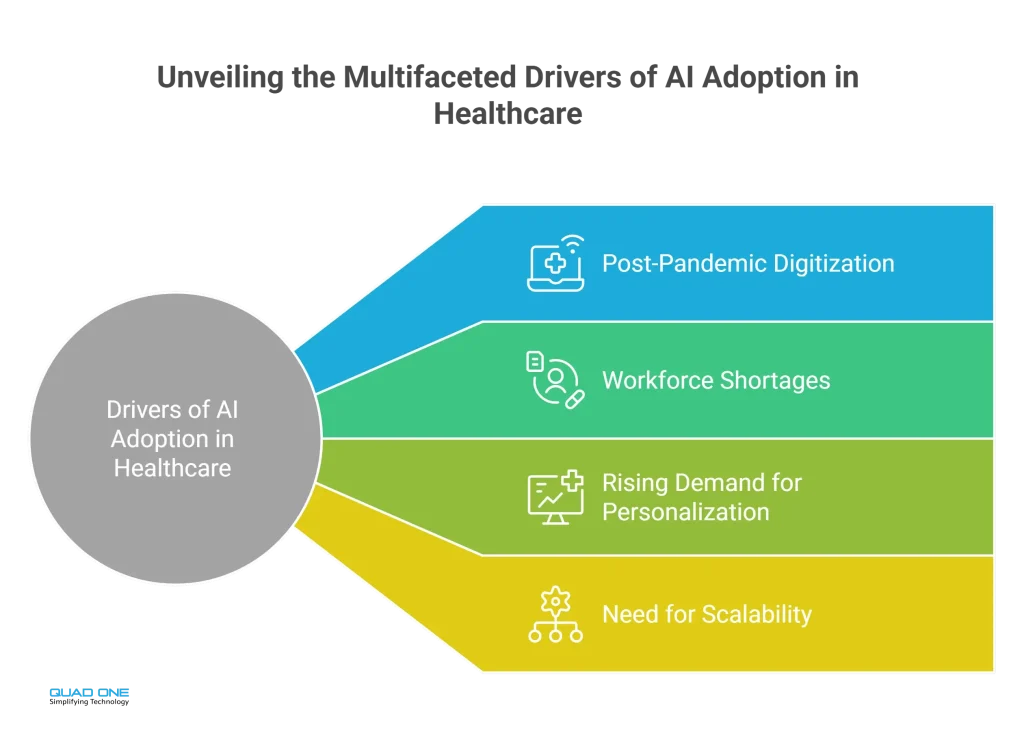
Clinical Applications of Prompt Engineering
Prompt engineering is increasingly important in clinical settings as it helps healthcare professionals use AI tools more effectively. By giving clear instructions, clinicians can get accurate information for diagnosis, patient data analysis, and treatment planning. This makes AI more reliable and helps improve overall efficiency in healthcare workflows.
Enhancing Diagnostic Accuracy with Medical AI Prompts
Structured prompts can significantly improve clinical decision support. For instance:
A 60-year-old male with chest pain and shortness of breath. Provide possible causes, recommended diagnostic tests, and an initial treatment plan.
Such prompts enable AI to generate organized and clinically relevant outputs, supporting faster and more accurate decision-making.
Domain-Specific Prompting in Clinical Practice
Specialty-focused prompts enhance precision and usability:
- Oncology: Analyze imaging for tumor size, location, and stage
- Mental Health: Guide patient conversations with empathetic follow-ups
- Cardiology: Interpret ECGs and flag abnormalities
Tailored prompts align AI outputs with clinical workflows, improving both efficiency and accuracy.
Personalized Treatment Planning
AI models can assist in developing treatment plans by incorporating patient history, co-morbidities, and clinical guidelines.
Prompt Format:
[Patient Summary] + [Clinical Goal] + [Guideline Constraints]
This approach ensures recommendations remain evidence-based while allowing clinicians to validate and refine outputs.
Streamlining Administrative Workflows with Prompt Engineering
Managing administrative tasks in healthcare can often be time-consuming and complex. Prompt engineering helps simplify these processes by guiding AI systems with clear instructions, making tasks like documentation, scheduling, and data handling faster and more accurate. This not only improves efficiency but also reduces workload, allowing healthcare staff to focus more on patient care.
Automating Clinical Documentation
Prompt-driven AI can reduce administrative workload by:
- Drafting clinical notes and summaries
- Generating referral letters
- Preparing discharge instructions
Prompt Format:
[Task] + [Document Type] + [Formatting Requirements]
Enhancing Operational Efficiency
Enhancing operational efficiency in healthcare focuses on improving how daily tasks and processes are managed. By optimizing workflows, reducing delays, and using technology effectively, organizations can save time, lower costs, and improve accuracy. This ultimately helps deliver faster, more reliable care and a better experience for both patients and staff.
AI prompts are also used for:
- Medical coding and billing support
- Prior authorization documentation
- Insurance communication
Standardized prompts improve turnaround time and ensure consistency across administrative processes.
Improving Patient Experience with Healthcare Chatbots
Integration strategies in hospitals aim to link different systems, technologies, and workflows for smoother operations. By bringing together tools like health records, AI, and clinical processes, hospitals can improve communication, minimize errors, and deliver better patient care. This leads to a more organized and efficient healthcare system.
Prompt Design in Virtual Health Assistants
AI-powered chatbots rely on structured prompts to:
- Conduct symptom checks
- Provide pre-visit guidance
- Offer follow-up care instructions
Empathetic and Clear Communication
Prompts that guide AI to respond in simple, patient-friendly language improve trust and engagement. They help translate complex medical information into understandable insights, enhancing the overall patient experience.
Integration Strategies for Hospitals
Hospitals often use many different systems that don’t always work well together. Integration strategies help connect these tools and processes so information flows smoothly across departments. This improves coordination, reduces errors, and makes overall hospital operations more efficient while supporting better patient care.
Embedding in EHR Systems
AI tools are increasingly integrated into platforms like EHR systems, where prompts are automatically triggered based on clinical context, enabling seamless workflow integration.
Training Clinical Teams
Educating healthcare professionals on prompt usage ensures:
- More effective AI interaction
- Reduced errors
- Consistent and reliable outputs
What Are Key Best Practices for AI Prompt Engineering in Healthcare?
Strong prompt engineering is key to generating accurate, safe, and context-relevant outputs from AI in healthcare. Following best practices helps organizations improve reliability, stay compliant, and support better clinical decisions while reducing potential risks.
Prompts Must Be Specific
Clear and detailed prompts lead to more accurate and relevant outputs. Vague instructions often result in incomplete or unreliable responses.
Provide Relevant Context With Follow-Up Prompts
Including patient history, clinical background, and additional clarifications helps AI generate more precise insights. Follow-up prompts can refine and improve responses further.
Give Examples of Desired Outputs
Providing sample outputs or formats helps guide AI in structuring responses correctly, ensuring consistency and usability in clinical settings.
Challenges and Ethical Considerations
The growing use of AI in healthcare brings both new possibilities and important challenges that cannot be overlooked. Factors such as accuracy, data privacy, bias, and overdependence on technology must be carefully addressed to protect patient safety and maintain trust. Ensuring responsible use through clear guidelines, ethical practices, and human oversight is essential for effective implementation.
Managing AI Hallucinations and Clinical Risk
AI systems may generate incorrect yet plausible responses. Structured prompts and human oversight are essential to minimize such risks.
Ensuring Data Privacy
Sensitive patient data must be protected through secure systems, de-identification, and compliance with healthcare regulations.
Responsible AI Use
Healthcare organizations must prioritize transparency, informed consent, and human involvement in critical decisions.
Future Outlook: Scaling Prompt Engineering in Healthcare
As AI evolves, prompt engineering will play a central role in enabling:
- Multimodal AI applications (text, images, and data integration)
- Advanced clinical decision support
- Personalized and scalable patient care
Investing in prompt libraries, governance frameworks, and continuous optimization will be key to unlocking long-term value.
Conclusion
Prompt engineering is rapidly becoming a foundational element in healthcare AI. By structuring inputs effectively and refining them over time, organizations can ensure AI delivers accurate, safe, and meaningful outcomes.
From improving diagnostics and automating documentation to enhancing patient engagement, prompt engineering is shaping a smarter, more efficient, and patient-centric healthcare ecosystem.
Advance Healthcare with Intelligent Innovation
Explore how prompt engineering and AI are shaping the future of healthcare delivery. Stay informed with expert-led insights and practical strategies. Subscribe for updates.